
Idle games and incremental games are built around a simple promise: progress continues even when you’re not actively playing. Over time, however, many players fall into patterns of constant clicking, long sessions, and unnecessary micromanagement.
Automation in Idle and Incremental Games transforms this experience by shifting the focus from effort to efficiency. When used thoughtfully, automation doesn’t replace gameplay—it reshapes it.
Table of Contents
From Constant Input to System Thinking
In the early stages of most idle titles, manual interaction feels rewarding. Auto Clicking produces immediate results, upgrades are frequent, and visible progress reinforces engagement.
But as scaling mechanics deepen, success depends less on constant input and more on smart decision-making. This is where Automation in Idle and Incremental Games becomes significant. Instead of measuring progress by activity level, players begin evaluating how efficiently their systems operate.
Automation reduces repetitive input and highlights optimization as the core mechanic. Players gradually shift from “doing more” to “designing better.”
Redefining What “Playing” Means
Traditionally, playing a game implies constant attention. With automation systems in place, presence becomes optional, and strategy becomes central.
Automation in Idle and Incremental Games redefines engagement as intentional intervention rather than nonstop activity.
Players now log in to:
- Make meaningful upgrade decisions.
- Reallocate resources strategically
- Trigger resets or prestige cycles
- Analyze scaling efficiency
The game continues progressing in the background. Instead of staying active for hours, players step in when decisions matter most.
Automation as a Design-Aligned Tool
Idle games are not harmed by automation—they are structured around it. Many already include internal automation features such as auto-buyers, offline gains, and passive production systems. Automation in Idle and Incremental Games aligns naturally with these mechanics.
External automation, when used responsibly, extends this philosophy during stages where manual input offers little strategic value. Rather than bypassing gameplay, it supports the system-focused design these games encourage.
This alignment shows that automation is not an exploit—it is often a continuation of intended progression mechanics.
How Automation Reduces Burnout?
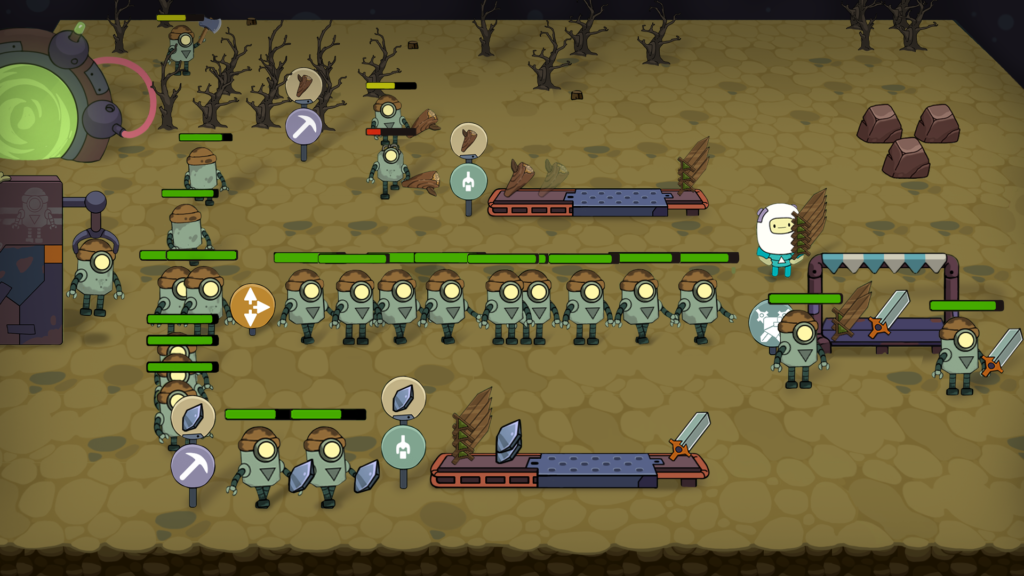
Repetition can quickly turn engagement into exhaustion. Clicking thousands of times may feel productive early on, but eventually the physical and mental strain outweighs the benefit. Automation in Idle and Incremental Games reduces that fatigue, preserving player motivation over the long term.
The results are clear:
- Shorter but more effective sessions
- Better decisions due to reduced mental overload
- Greater long-term retention
- Less physical strain
When players avoid burnout, they tend to progress further—not because they invest more hours, but because they approach the game strategically.
Changing Progression Pacing
Idle games are built around scaling curves. Without automation, progress often comes in bursts—intense activity followed by stagnation. With automation, pacing becomes steady and predictable.
Automation in Idle and Incremental Games smooths out progression, ensuring consistent output even when the player steps away, rather than relying on irregular manual bursts; growth compounds continuously.
This consistency frequently outperforms intense but inconsistent manual effort.
Consistency Over Intensity
Incremental systems reward sustained efficiency rather than short-term intensity. Automation maintains optimal resource generation across long periods, compounding advantages over time.
Through Automation in Idle and Incremental Games, players achieve stable scaling. Systems operate at peak efficiency without requiring constant oversight. This shift reinforces the idea that strategy—not stamina—is the defining skill.
Shifting Skill Expression
Idle games are often misunderstood as “simple” because they lack reflex-based mechanics. In reality, they reward long-term planning and synergy analysis. Automation in Idle and Incremental Games makes this clearer by removing distractions.
Players focus on:
- Upgrade synergy optimization
- Timing prestige resets
- Balancing exponential growth curves
- Long-term multiplier stacking
By eliminating repetitive clicking, automation reveals where true mastery lies—in system design and strategic timing.
Encouraging Experimental Playstyles
When mechanical effort is minimized, players feel more comfortable experimenting. Trying alternative upgrade paths or adjusting reset timing becomes less risky when progress doesn’t rely on constant manual input.
Automation in Idle and Incremental Games supports experimentation by reducing the cost of trial-and-error. Players can explore strategies without sacrificing hours of effort.
This freedom often leads to deeper understanding and improved optimization. Experimentation becomes part of the enjoyment rather than a setback.
Staying Engaged Without Being Overwhelmed
Modern players balance games with work, education, and personal life. Automation allows incremental titles to integrate naturally into daily routines rather than dominate them.
With Automation in Idle and Incremental Games, engagement becomes intentional. Players check in to refine strategy rather than maintain constant activity.
This creates a healthier relationship with gameplay, reducing pressure while maintaining progress. Instead of organizing life around the game, the game fits into life.
Playing Responsibly Within Game Systems
Not every title treats automation the same way. Some incorporate automation directly; others limit the use of external tools. Players should always respect each game’s rules and community guidelines.
Moderate and aligned use of Automation in Idle and Incremental Games supports strategic depth without disrupting balance. The goal is enhancement, not exploitation.
Responsible use ensures that automation remains a tool for optimization rather than a shortcut that undermines design.
Final Thoughts
Idle and incremental games were never about constant clicking—they were about growth systems. Automation in Idle and Incremental Games highlights this truth by shifting emphasis from repetitive effort to intelligent planning.
When used thoughtfully, automation transforms endurance challenges into strategic experiences. It reduces fatigue, stabilizes progression, and encourages experimentation.
Most importantly, it allows players to focus on what truly defines these games: optimization, scaling, and long-term efficiency. Automation doesn’t change what idle games are—it changes how well they are played.